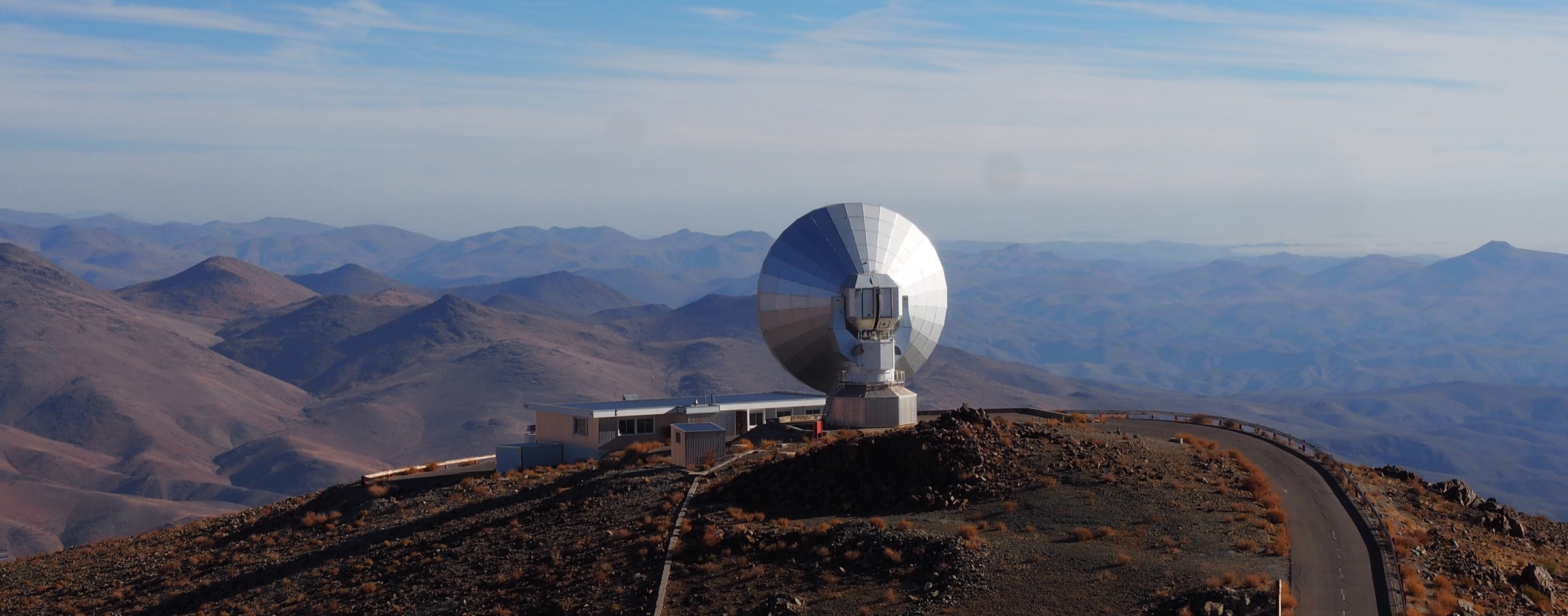
Panorama of La Silla Observatory in the Chilean Atacama desert, with the SEST dish telescope

Hi!

I am a PhD candidate at the Max Planck Institute for Astronomy in Heidelberg and interested in observational astronomy, binary stars, and black holes.

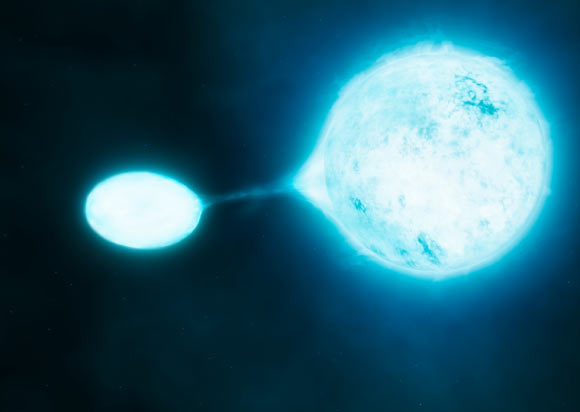
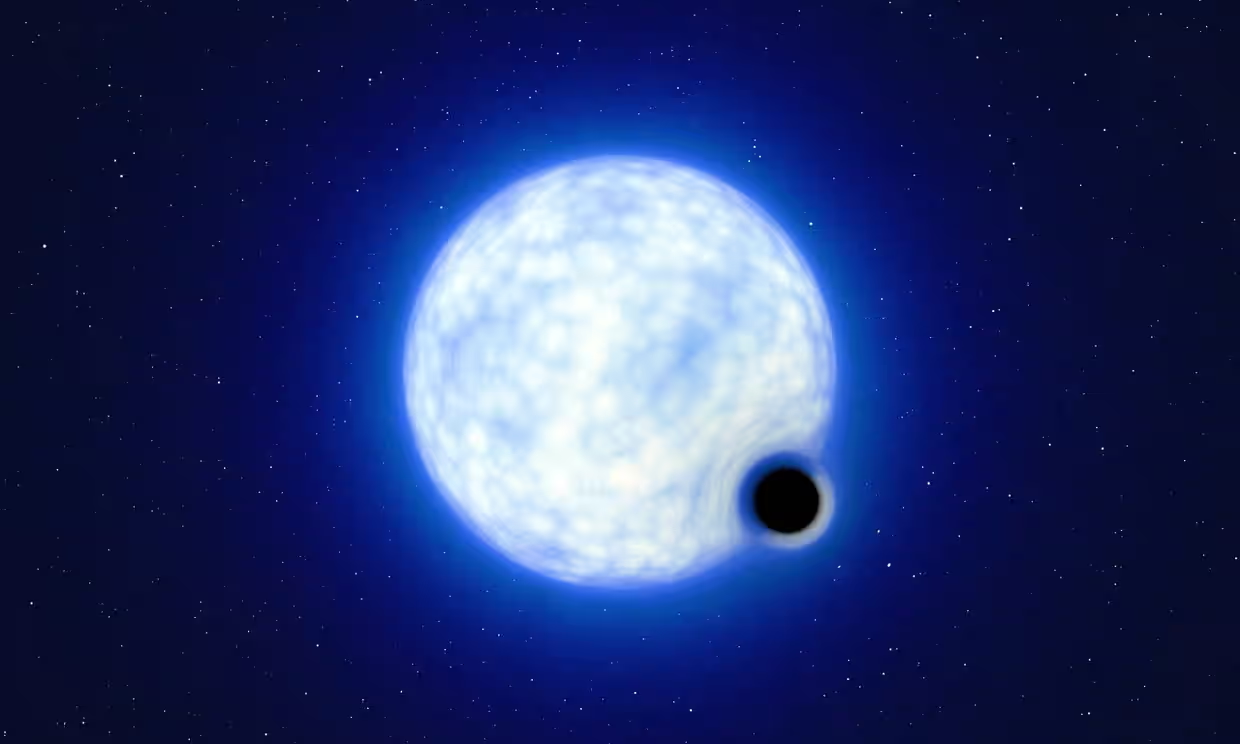
In September 2023, I started my PhD at MPIA Heidelberg, where I am working with Professor Hans-Walter Rix on the search for dormant black holes. Based on high-resolution, multi-epoch spectroscopy, I search for and characterize binary star systems with possible compact companions. I am interested in uncovering the formation pathways of these systems and, more broadly, in constraining the properties of the black hole population in the Milky Way.

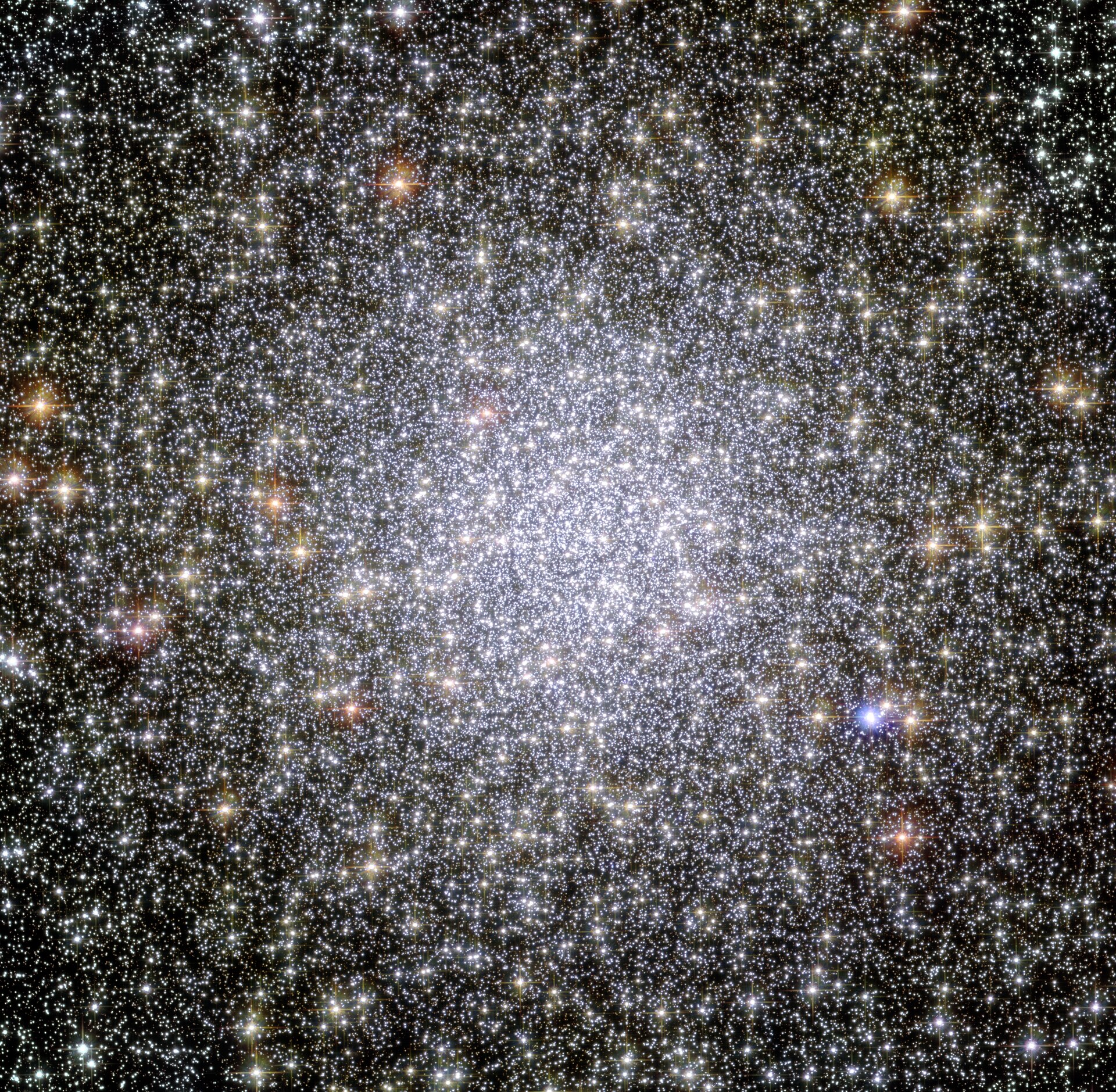
Before that, I did my undergraduate studies at the University of Göttingen and have spent two semesters abroad at the Universities of Padova and Stockholm. In my Master's thesis, I studied spectroscopic binaries in globular clusters, working with Professors Stefan Dreizler and Sebastian Kamann and the MUSE consortium.

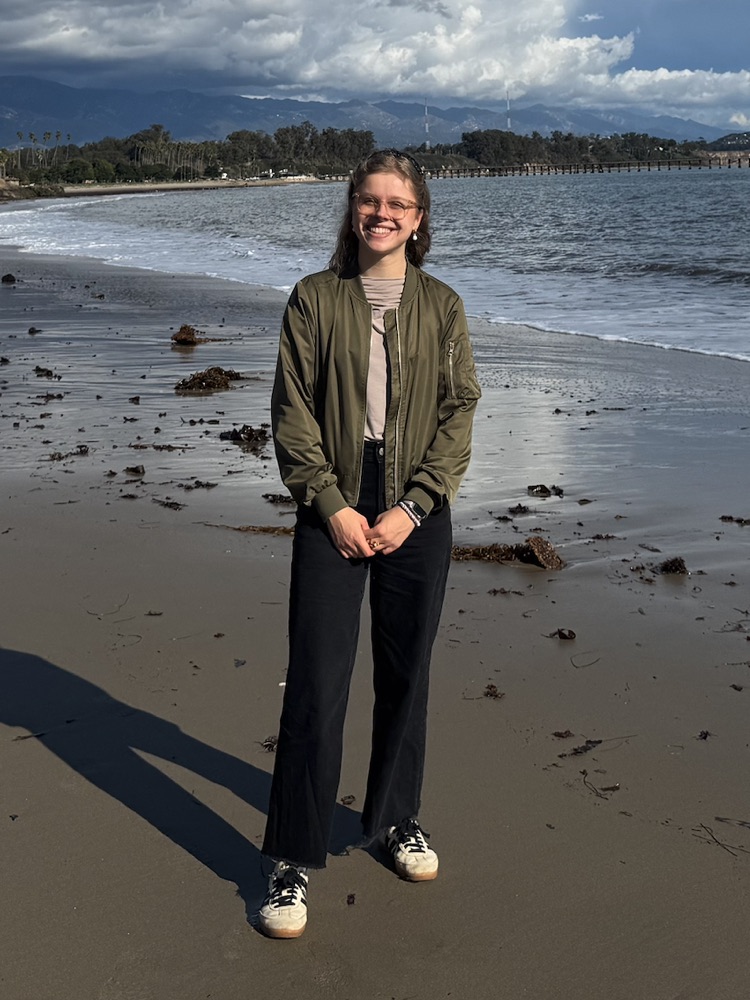
Johanna Müller-Horn standing on a beach by the ocean

Header image: La Silla Observatory, Chile, with the Swedish-ESO Submillimetre Telescope (SEST).

Research

Publications

You can find my publications on ADS and via orcid.

First-author papers
2026
2025
Co-author papers
2026
2025
2023

Talks

2026
  • September 2026
    Hunting for dormant black holes — and their impostors
    IMPRS-HD Summer School 2026
    @ Heidelberg University
    Invited talk
  • July 2026
    Galactic Emission-Line Stars and Stripped Stars from SDSS-V
    SDSS-V Collaboration Meeting
    @ KU Leuven
    Contributed talk
  • July 2026
    Galactic Emission-Line Stars and Stripped Stars from SDSS-V
    LIAC42 - To Be or not to Be: Understanding the star, the disk, and the stripped companions
    @ University of Liège
    Contributed talk
  • April 2026
    Hunting for Dormant Black Holes and their impostors
    ECR Workshop Multiple Systems Across Scales
    @ Heidelberg University
    Invited talk
  • March 2026
    Black Holes, Emission Line Objects, and Stripped Stars
    SDSS-V MWM SciFest
    @ Osservatorio Astrofisico di Arcetri, Firenze
    Contributed talk
  • March 2026
    Toward mapping the brown dwarf desert - A clean and well-understood sample of substellar companions from Gaia
    Preparing for Gaia’s Exoplanet Bonanza
    @ Ringberg Castle
    Contributed talk
2025
  • December 2025
    Hunting for Dormant Black Holes with Gaia DR3
    Group meeting Mapelli
    @ ITA Heidelberg
    Invited talk
  • December 2025
    Observational Tests of Formation Models for Black Holes in Binaries
    Group meeting Schneider/Röpke
    @ HITS Heidelberg
    Invited talk
  • November 2025
    Hunting for Dormant Black Holes with Gaia DR3
    The Lifecycle of Stellar Black Holes
    @ KITP Santa Barbara
    Contributed talk, Recording
  • November 2025
    Observational Tests of Formation Models for Black Holes in Binaries
    Stellar-Mass Black Holes at the Nexus of Optical, X-ray, and Gravitational Wave Surveys
    @ KITP Santa Barbara
    Invited talk, Recording
  • July 2025
    In Search of the Invisible: Hunting for Dormant Black Holes with Gaia DR3
    Binary Stars in the Space Era
    @ Keele University
    Contributed talk
  • June 2025
    Hunting for Dormant Black Holes in SDSS-V: A Search for Dark Companions to Massive Stars
    SDSS-V Collaboration Meeting
    @ MPIA Heidelberg
    Contributed talk
  • February 2025
    A dearth of short-period binaries in the globular cluster 47 Tuc
    Galaxy Coffee
    @ MPIA
    Contributed talk
2024
  • July 2024
    Searching for Black Holes in Binaries with Spectroscopic Surveys
    Liège International Astrophysical Colloquium
    @ University of Liège
    Contributed talk
  • February 2024
    Binary properties of the globular cluster 47 Tuc
    Cahill Tea Talk
    @ Caltech
    Invited talk
2023
  • September 2023
    Binary Properties of the Globular Cluster 47 Tuc (NGC 104)
    Two in a million - The interplay between binaries and star clusters
    @ ESO, Garching
    Contributed talk, slides
  • June 2023
    The Binary Population of NGC 104 - Searching for Stellar Remnants in Globular Clusters with MUSE
    The Renaissance of Stellar Black-Hole Detections in The Local Group
    @ Lorentz Center, Leiden
    Poster presentation

CV

Current Position

  • 2023 – present
    Doctoral Researcher

    Max Planck Institute for Astronomy & University of Heidelberg

    • Observational stellar astrophysicist studying massive binary evolution and its outcomes, from stripped stars to black holes. I combine large spectroscopic and astrometric surveys, high-resolution spectroscopy, and statistical modelling to identify and characterise these binary systems and test models of massive-star evolution.

Education & Experience

  • 2023 – 2027
    PhD Astronomy

    International Max Planck Research School for Astronomy & Cosmic Physics at the University of Heidelberg (IMPRS-HD)

    • Supervisor: Prof. Hans-Walter Rix
    • Planned completion: July 2027
    • Thesis topic: Hunting for dormant black holes in binary systems
    • Developed and conducted a Gaia DR3 search identifying 389 candidate dormant black-hole binaries.
    • Led follow-up investigations that identified multiple stripped-star + Be-star systems masquerading as black-hole candidates.
    • Discovered and characterised a Galactic intermediate-mass stripped star in SDSS-V spectroscopy.
  • 2021 – 2022
    Research Intern (EU Erasmus+ Scholarship)

    The Oskar Klein Centre, Stockholm, Sweden

    • Supervisor: Dr. Jens Jasche
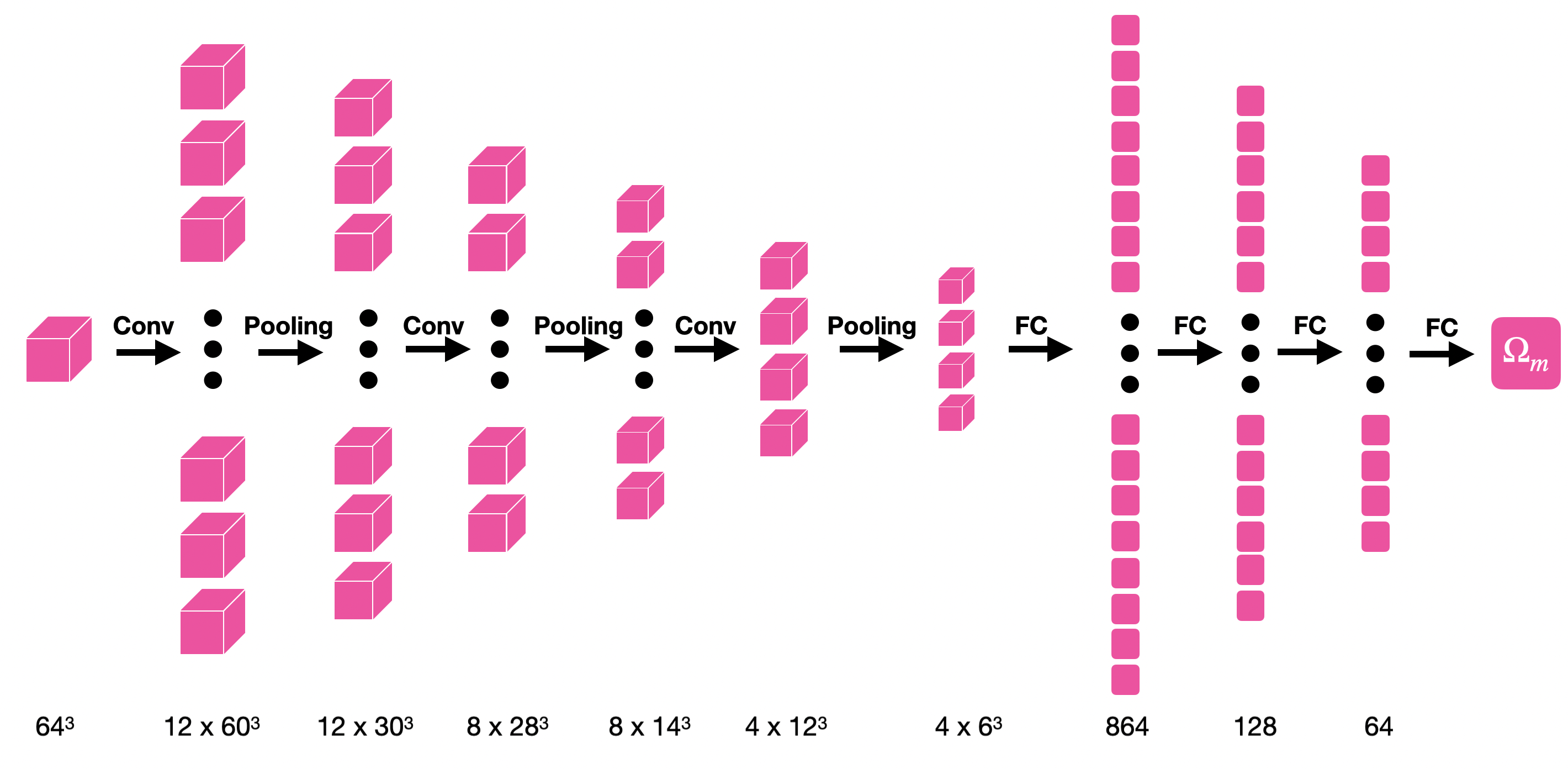
    • Investigated cosmological parameter inference with convolutional neural networks.
  • 2021
    Research Intern (MPIA Summer Internship)

    Max Planck Institute for Astronomy, Heidelberg

    • Supervisors: Dr. Gabriele Picchierri and Dr. Bertram Bitsch
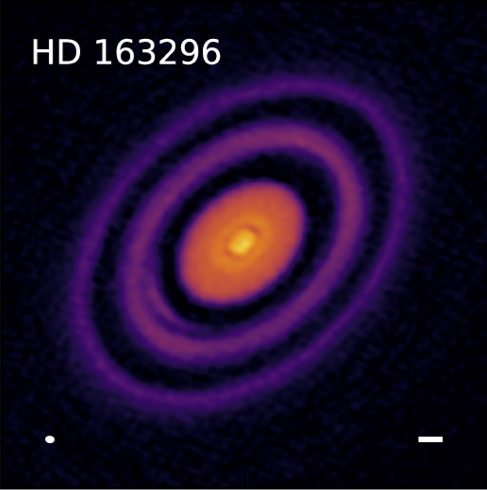
    • Modelled gap-opening giant planets in protoplanetary discs.
  • 2020 – 2023
    MSc Physics

    Georg-August-Universität Göttingen, Germany

    • Supervisors: Prof. Stefan Dreizler and Prof. Sebastian Kamann
    • Studied the binary population of the globular cluster 47 Tuc (NGC 104) from multi-epoch VLT/MUSE spectroscopy.
    • Identified several hundred binary candidates from radial-velocity variability, measured the cluster binary fraction, and found a dearth of short-period binaries.
  • 2016 – 2020
    BSc Physics

    Georg-August-Universität Göttingen, Germany

    • Supervisor: Prof. Stefan Dreizler
    • Erasmus+ exchange semester at Università degli Studi di Padova, Italy (February – July 2019).

Honours & Awards

Contact

  • mueller-horn@mpia.de
  • Max-Planck-Institut für Astronomie
    Königstuhl 17
    D-69117 Heidelberg, Germany